Decoding Bonus Pathways from Initial Sign-Up Through Payment Verification to Slot and Table Game Access on Mobile Devices
Written by Leon Hansen · Oct 5, 2026
Decoding Bonus Pathways from Initial Sign-Up Through Payment Verification to Slot and Table Game Access on Mobile Devices
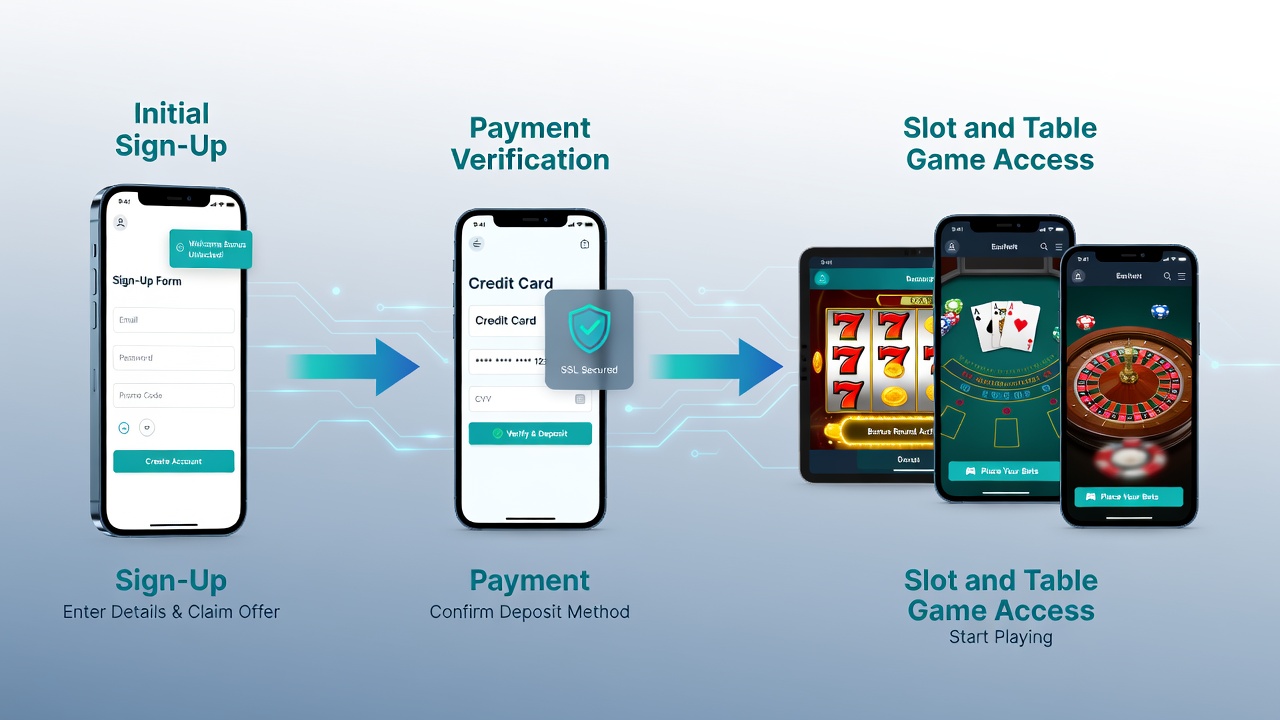
Operators structure bonus pathways as sequences that begin with account creation and extend through identity checks before players reach slot machines or table games on mobile devices, and these sequences follow protocols set by licensing authorities across multiple jurisdictions. Registration typically requires an email address, phone number, and basic personal details while the system generates a unique player identifier that links to any promotional offers attached at that stage. Data from industry reports shows that completion rates improve when platforms minimize the number of required fields yet still satisfy regulatory standards for age verification and location confirmation.
Account Creation and Initial Bonus Attachment
Players enter required information on mobile apps or responsive websites where forms adapt to screen size and operating systems such as iOS or Android, and the process often includes automatic detection of device type to optimize display. Once the account exists the system attaches welcome bonuses or deposit match offers according to predetermined rules that specify eligibility windows and wagering multipliers. Observers note that platforms log each step in real time so that any interruption during sign-up can resume without loss of the attached incentive provided the player returns within the allotted period.
Payment Verification and Compliance Checks
Financial verification follows registration and involves submission of payment method details along with supporting documents such as government-issued identification or proof of address when thresholds are met. Systems cross-reference these documents against third-party databases to confirm identity while also screening for restricted jurisdictions and self-exclusion lists maintained by regulatory bodies. According to figures released by the New Jersey Division of Gaming Enforcement, verification completion times average under two hours for most mobile users when automated tools handle the majority of checks and only flag complex cases for manual review.
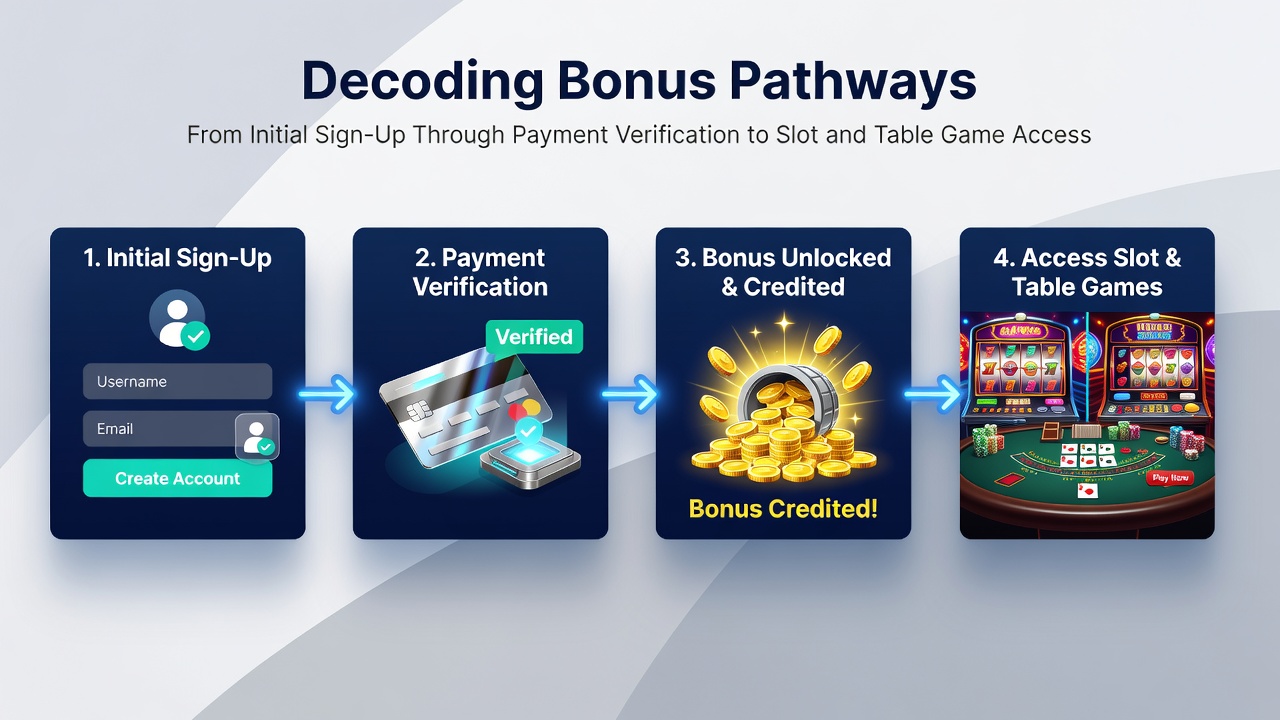
Once payment details clear the platform credits any associated bonus funds or free spins to the player account and updates the balance display visible within the mobile interface. This stage also activates responsible gaming tools such as deposit limits or reality checks that remain active throughout subsequent play sessions. Research published by the Canadian Gaming Association indicates that verified accounts exhibit higher retention rates over the first thirty days compared with accounts that bypass full verification steps where regulations permit such options.
Transition to Slot and Table Game Access
After verification completes players navigate to categorized game lobbies where slots appear in grids sorted by volatility, theme, or provider while table games occupy separate sections featuring blackjack, roulette, and poker variants optimized for touch controls. Mobile interfaces detect screen orientation and adjust button placement accordingly so that players can switch between portrait and landscape modes without interrupting active bonus tracking. In October 2026 several North American operators reported expanded mobile table game offerings following hardware improvements that reduced latency during live dealer streams.
Bonus terms dictate which games contribute toward wagering requirements with slots generally counting at one hundred percent while certain table games contribute at lower percentages or remain excluded entirely. The system monitors play in real time and displays progress toward completion through in-app notifications or dashboard widgets that update after each spin or hand. Those who have studied player behavior patterns observe that clear progress indicators correlate with increased session lengths on mobile devices across multiple markets.
Regional Regulatory Variations and Mobile Standards
Licensing frameworks in different regions impose distinct requirements on the order of verification steps and the types of bonuses permitted at sign-up. Australian operators follow guidelines from the Australian Communications and Media Authority that emphasize pre-commitment tools and harm minimization measures integrated directly into mobile apps before any game access occurs. European jurisdictions outside the United Kingdom maintain their own testing standards for random number generators and bonus calculation engines that mobile platforms must demonstrate during licensing renewals.
Device compatibility testing covers a range of screen resolutions and operating system versions to ensure that bonus meters and game controls remain functional without requiring additional downloads beyond the initial app installation. Platforms maintain separate test environments where updates to payment processors or game libraries undergo verification before deployment to production servers serving mobile users.
Conclusion
The pathway from initial registration through payment verification to game access forms a controlled sequence governed by technical adn regulatory requirements that differ by jurisdiction yet share common elements across mobile platforms. Data collected by operators and oversight bodies continues to inform refinements in verification speed and bonus transparency while maintaining compliance with location and age restrictions. Players encounter these structured flows each time they create accounts or claim new offers on their devices.